Why Holding Your Own Bitcoin Matters
“Not Your Keys, Not Your Bitcoin”
If you don’t control the private keys, you don’t truly own the Bitcoin.
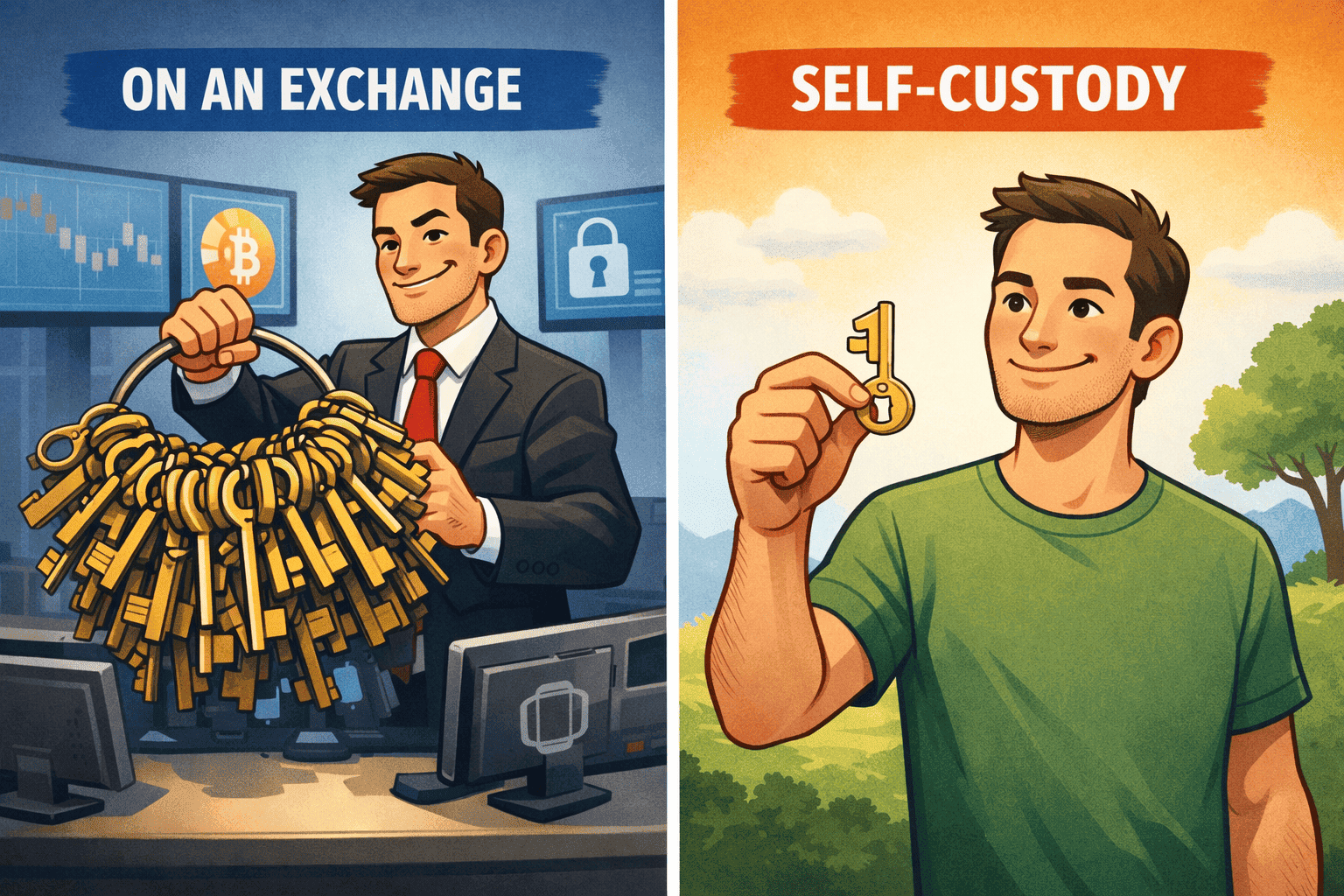
This phrase became popular because many people buy Bitcoin on exchanges and never withdraw it. In that case, the exchange holds the keys, NOT you.
Think of it like this:
You may see a balance on your screen, but what you actually have is a promise from the exchange to give you Bitcoin later.
A Simple Analogy
Imagine a safe filled with gold.
- The safe is your wallet
- The gold is your Bitcoin
- The key is your private key
If someone else holds the key, you are trusting them to give you access when you ask. Self Custody means you hold the key yourself.
What Happens When You Use an Exchange?
When Bitcoin stays on an exchange:
- The exchange controls the private keys
- Withdrawals can be paused
- Accounts can be frozen
- Funds can be lost due to hacks or bankruptcy
History has shown this risk many times. Even large, well known platforms have failed.
Some people choose exchanges for convenience. That’s understandable, especially when starting out. But it’s important to understand the trade off:
- Convenience means giving up control
- Ownership means taking responsibility
True Bitcoin ownership begins when you withdraw your coins to a wallet you control.
Why This Matters for Bitcoin
Bitcoin was created to work WITHOUT trusted intermediaries.
As described in the Bitcoin whitepaper:
“A purely peer-to-peer version of electronic cash would allow online payments to be sent directly from one party to another without going through a financial institution.”
When Bitcoin is left on exchanges, the system starts to look like traditional banking again, just with different companies in control.
Self Custody keeps Bitcoin aligned with its original purpose.